

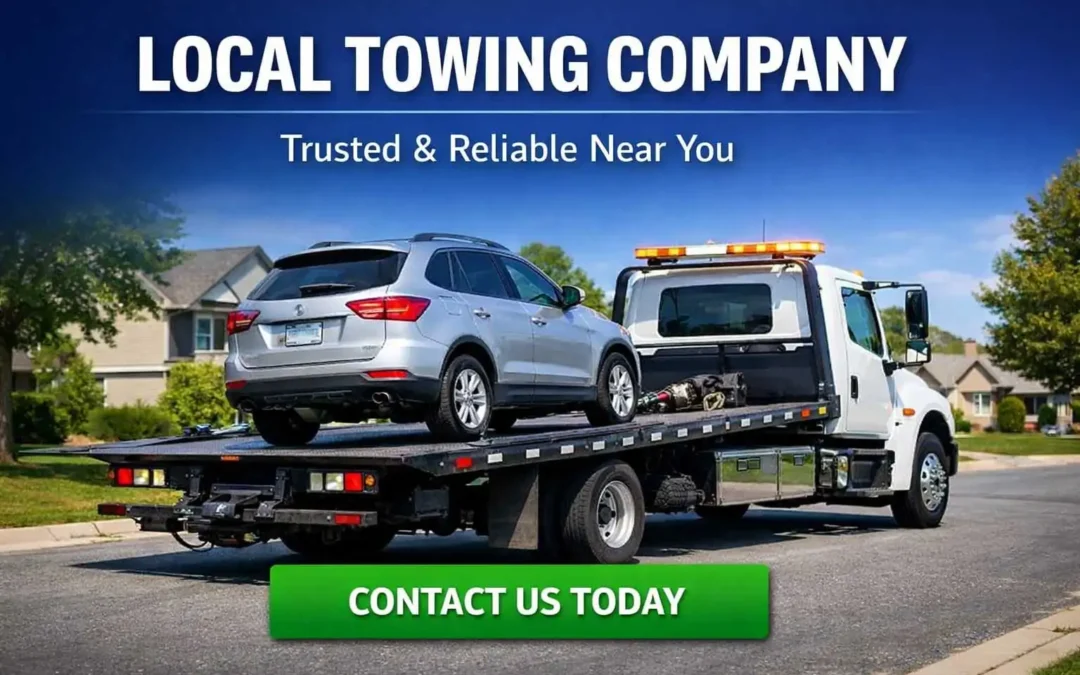
🚛 Quick Answer: There are 6 main types of tow trucks: flatbed (rollback), wheel lift, hook and chain, integrated wrecker, boom truck, and rotator. For most passenger cars and SUVs, a flatbed tow truck is the safest choice because all four wheels are off the ground. For tight spaces like parking garages, a wheel lift truck is faster and more manoeuvrable. Heavy duty tow trucks (wreckers and rotators) handle semi-trucks, buses, and major accident recovery. Call Towing Toronto (647) 812-1477 — we dispatch the right truck type for your situation.
Not sure which tow truck you need? Tell us your situation — we will send the right one.
Not all tow trucks are the same. Walk past a towing company’s yard and you will see vehicles ranging from pickup-truck-sized wheel lifts to massive tri-axle rotator wreckers that cost over half a million dollars. Each type is purpose-built for specific situations — and requesting the wrong one can mean delays, extra charges, or even damage to your vehicle.
Understanding the different types of tow trucks helps you make a smarter call when you are stranded on the 401, stuck in a parking garage, or need a heavy commercial vehicle recovered after an accident. This guide breaks down every tow truck type used in Toronto, explains when each one is the right choice, and helps you know exactly what to ask for when you call for service.
The 6 Types of Tow Trucks
The towing industry uses six main categories of tow truck. Here is a quick overview before we break each one down in detail:
1. Flatbed Tow Truck (Rollback / Slide / Tilt Tray)
✅ Advantages
Safest method — all 4 wheels off the ground. No drivetrain damage risk. Works for every vehicle type including AWD, 4WD, lowered, and damaged cars. Best for long-distance towing.
⚠️ Limitations
Larger and harder to manoeuvre in tight spaces. Cannot fit in most parking garages. Typically costs more than a wheel lift tow. Requires space to tilt the bed and load the vehicle.
The flatbed tow truck — also called a rollback, slide, or tilt tray — is the most common and versatile type of tow truck you will see on Toronto roads. The entire rear of the truck is a flat hydraulic platform that tilts down to ground level, allowing a vehicle to be driven on or winched up the ramp. Once loaded, all four wheels sit on the deck and the vehicle is strapped down securely for transport.
Flatbeds are the gold standard for safe towing. Because the vehicle rides entirely on the deck with no wheels touching the road, there is zero risk of drivetrain, transmission, or suspension damage during transport. This makes them the mandatory choice for all-wheel-drive (AWD) and four-wheel-drive (4WD) vehicles, where towing with drive wheels on the ground can destroy the transfer case or differential. Flatbeds are also the preferred method for exotic and luxury vehicle transport, electric vehicle towing, and motorcycle towing.
When to request a flatbed: Any AWD or 4WD vehicle, luxury or exotic cars, EVs, motorcycles, vehicles with severe damage or flat tires, lowered or modified vehicles, long-distance tows (over 20 km), and any time you want maximum protection. Learn more at our flatbed towing service page.
2. Wheel Lift Tow Truck
✅ Advantages
Faster hookup than a flatbed. More manoeuvrable in tight spaces. Lower cost for short tows. Can fit in parking garages and narrow streets. Quick deployment for parking enforcement.
⚠️ Limitations
Two wheels remain on the ground — risk of wear or damage on longer tows. Not suitable for AWD/4WD without dollies. Not ideal for severely damaged or lowered vehicles.
The wheel lift tow truck uses a hydraulic metal yoke (a U-shaped cradle) that slides under the front or rear wheels of the vehicle and lifts them off the ground. The opposite pair of wheels remains on the road. Think of it as a modernized, gentler version of the old hook-and-chain method — the yoke grips the tires rather than hooking onto the frame, greatly reducing the risk of damage.
Wheel lifts are the workhorses of urban towing. Their compact size allows them to operate in spaces where a flatbed simply cannot fit — parking garages, narrow downtown Toronto side streets, and congested lanes. Many operators can hook up a vehicle in under a minute, making wheel lifts the fastest option for short-distance tows and parking enforcement.
Front-wheel-drive (FWD) vehicles are typically lifted from the front so the drive wheels are off the ground. Rear-wheel-drive (RWD) vehicles are lifted from the rear. This prevents the transmission and drivetrain from spinning while being towed. For AWD vehicles, a wheel lift can still be used if tow dollies are placed under the remaining wheels — but a flatbed is almost always the better choice.
3. Hook and Chain Tow Truck
The hook and chain tow truck is the original type of tow truck, invented in 1916 by Ernest Holmes Sr. in Chattanooga, Tennessee. It works by wrapping chains around the vehicle’s frame or axle, then using a boom winch to lift the front end while the rear wheels drag along the road.
Today, hook and chain trucks are rarely used on modern vehicles because the chains can scratch paint, dent body panels, and damage bumpers that are made of lightweight plastic or fibreglass rather than steel. However, they still have a role in the industry for towing scrap and junk vehicles, wrecked cars headed for the crusher, and vehicles that are too damaged for a flatbed to load safely.
⚠️ Warning: If a towing company arrives with a hook and chain truck for your modern, driveable vehicle, you have the right to refuse and request a flatbed or wheel lift instead. Under Ontario’s towing consumer protection regulations, you are entitled to choose how your vehicle is towed.
4. Integrated Wrecker Tow Truck (Heavy-Duty Wrecker)
The integrated wrecker — often simply called a “wrecker” — combines a boom, winch, and wheel-lift system into a single heavy-duty unit. All controls are typically operated from inside the cab, allowing the driver to back up to a vehicle, secure it, and lift it without leaving the truck. This makes the wrecker tow truck the workhorse of medium and heavy-duty towing.
Integrated wreckers come in three weight classes:
A heavy-duty wrecker tow truck is what you see responding to jackknifed transport trucks on the 401 or recovering a TTC bus that has slid off the road in winter. These are massive Class 7 and Class 8 trucks with boom capacities of 25 to 50 tons and multiple winch lines. A new heavy-duty wrecker costs $250,000 to $650,000+ depending on specifications — which is why heavy towing rates are significantly higher than standard car towing.
We Match the Right Truck to Your Situation
Flatbed, wheel lift, or heavy wrecker — tell us what happened and we will dispatch the right equipment.
(647) 812-1477
📞 Call For Towing Now View Towing Price Guide →
5. Boom Truck
A boom truck features a hydraulic arm (the boom) with a winch that can be extended outward and upward to reach vehicles that cannot be accessed by backing a tow truck up to them. The boom is used primarily for recovery rather than towing — pulling vehicles out of ditches, up embankments, out of culverts, or off soft shoulders where the tow truck itself cannot safely drive.
In Toronto, boom trucks are regularly deployed for winching and recovery situations: vehicles that have slid off icy ramps on the DVP, cars stuck in snowbanks along residential streets, and vehicles that have gone over curbs into ravine-adjacent areas. Some boom trucks also have a fixed or adjustable A-frame design that allows limited towing, but they are primarily recovery tools rather than transportation vehicles.
6. Rotator Tow Truck (Heavy Recovery)
The rotator is the most powerful and expensive type of tow truck in existence. It features a telescopic boom that can rotate 360 degrees on a turret — essentially turning the tow truck into a mobile crane. Rotators are used for the most complex and dangerous recovery operations: overturned tractor-trailers, multi-vehicle highway pile-ups, submerged vehicles, and any situation where a load needs to be precisely lifted, rotated, and repositioned.
Modern rotators range from 25-ton to 100-ton capacity. The largest rotators — like the Century M100 — feature boom heights over 53 feet, outrigger spans exceeding 25 feet, and multiple winch lines rated at 30,000 to 65,000 pounds each. A fully equipped 50-ton rotator costs $500,000 to $1,000,000+ and requires specialized training and licensing to operate.
Fun fact: The world’s first tow truck was invented in 1916 when Ernest Holmes Sr. of Chattanooga, Tennessee, needed six men, blocks, and ropes to pull a car out of a creek. He realized there had to be a better way — and built a crane-like lifting device on the back of a 1913 Cadillac. The International Towing and Recovery Hall of Fame and Museum in Chattanooga commemorates this history.
Which Type of Tow Truck Do You Need?
The right tow truck depends on your vehicle, the situation, and the distance. Here is a practical decision guide:
When in doubt, always request a flatbed. It is the most protective option and works for virtually any passenger vehicle. If a flatbed cannot access your location (parking garage, narrow alley), the dispatcher will let you know and recommend the right alternative. For pricing across all truck types, see our towing cost Toronto price guide.
Flatbed vs. Wheel Lift: The Most Common Choice
For everyday passenger vehicle towing, the choice usually comes down to flatbed vs. wheel lift. Here is a side-by-side comparison:
🚛 Flatbed Tow Truck
⏱️ Hookup time: 5–10 minutes
🛡️ Protection level: Maximum
📏 Best distance: Any distance
💰 Cost: $$ – $$$
🅿️ Parking garages: Usually no
🔧 AWD/4WD safe: ✅ Yes
🔧 Wheel Lift Tow Truck
⏱️ Hookup time: 1–3 minutes
🛡️ Protection level: Good (short tows)
📏 Best distance: Under 20 km
💰 Cost: $ – $$
🅿️ Parking garages: ✅ Yes
🔧 AWD/4WD safe: ⚠️ Only with dollies
Special Considerations for Toronto Drivers
Toronto’s urban layout and Ontario’s regulations create specific considerations when choosing a tow truck type:
Downtown condos and underground garages: Many downtown Toronto condo garages have ceiling clearances of 6 to 7 feet with tight turning radii. Only a compact wheel lift tow truck can access these spaces. If you live in a condo, ask your building management which tow truck types can enter your garage.
Winter road conditions: Toronto’s winters mean more vehicles sliding into ditches and snowbanks, which require boom trucks or wreckers for recovery before towing. If your vehicle went off the road, the towing company may need to send two units — a boom or wrecker for extraction and a flatbed for transport. For more winter preparation tips, read our Toronto winter driving safety guide.
Growing EV population: As Toronto sees more Teslas, Hyundai Ioniq 5s, and other EVs on the road, flatbed towing becomes increasingly important. Most EVs should never be towed with wheels on the ground because the electric motor generates electricity when the wheels spin (regenerative braking), which can damage the motor and battery. Always request a flatbed for EV towing.
Ontario’s towing regulations: Under Ontario’s Towing and Storage Safety and Enforcement Act (TSSEA), you have the right to choose your towing company and destination. Knowing the types of tow trucks available helps you make informed decisions when speaking with operators at an accident scene.
Tow Truck Service Areas Across the GTA
Towing Toronto maintains a fleet that includes flatbed trucks, wheel lifts, and heavy-duty wreckers. We dispatch the correct truck type based on your vehicle and situation, and we provide 24-hour towing, accident towing, roadside assistance, and long distance towing across the GTA. For fleet and business clients, see our fleet towing and business towing services. Questions about insurance billing? We handle direct billing for most major insurers.
Frequently Asked Questions About Tow Truck Types
What is the most common type of tow truck?
The flatbed tow truck (also called a rollback or slide) is the most common and widely used type. It is the safest option for transporting vehicles because all four wheels ride on the deck, eliminating the risk of drivetrain damage during transport.
What is the difference between a wrecker and a tow truck?
A wrecker is a specific type of tow truck — not a separate category. The term “wrecker” typically refers to an integrated tow truck that combines a boom, winch, and wheel-lift system for both recovery and towing. All wreckers are tow trucks, but not all tow trucks are wreckers. Flatbeds, wheel lifts, and boom trucks are other types of tow trucks.
Can a wheel lift tow truck tow an AWD or 4WD vehicle?
It can, but only if tow dollies are placed under the pair of wheels that remain on the ground. Without dollies, towing an AWD vehicle with drive wheels on the road can damage the transfer case, differential, or transmission. For AWD and 4WD vehicles, a flatbed is almost always the safer and more cost-effective choice.
How much does a heavy duty tow truck cost to hire?
Heavy-duty towing rates in the GTA are significantly higher than standard towing due to the specialized equipment involved. Expect to pay $300 to $700+ per hour for a heavy wrecker, and even more for a rotator. Rates vary based on the complexity of the job, time of day, and location. Contact us for a quote specific to your situation.
Why are flatbed tow trucks more expensive than wheel lifts?
Flatbed trucks cost more to purchase, maintain, and operate. They are larger vehicles that consume more fuel, and the loading/unloading process takes longer than a wheel lift hookup. The higher cost reflects the better protection they provide — your vehicle rides completely off the ground with no risk of road damage during transport.
Which type of tow truck is used for Tesla and electric vehicles?
A flatbed is required for virtually all electric vehicles. Towing an EV with wheels on the ground causes the electric motor to spin, generating electricity through regenerative braking. This can overheat and damage the motor and battery system. Tesla specifically recommends flatbed-only towing in its owner’s manuals.
What is a rotator tow truck used for?
A rotator is used for the most complex and heavy recovery operations. Its 360-degree rotating boom works like a mobile crane, allowing operators to upright overturned semi-trucks, recover vehicles from embankments, and perform precision lifts in multi-vehicle accident scenes. Rotators range from 25-ton to 100+ ton capacity.
Do I get to choose which type of tow truck is sent?
Yes. When you call for a tow, you can request a specific truck type. If a flatbed is sent when a wheel lift would have been cheaper, or vice versa, you have the right to ask for what you need. A reputable towing company will dispatch the most appropriate truck based on your vehicle type, situation, and location.
Are hook and chain tow trucks still used?
Rarely for modern vehicles. Hook and chain trucks can scratch paint and damage body panels, so they are mostly used for scrap cars, totalled vehicles, and junk removal. If a company sends a hook and chain truck for your working vehicle, you should request a flatbed or wheel lift instead.
What should I tell the dispatcher when I call for a tow?
Give the dispatcher your exact location, your vehicle’s make, model, and year, whether it is AWD or 4WD, what happened (accident, breakdown, flat tire, dead battery), and where you want the vehicle taken. This information helps them send the correct type of tow truck the first time, avoiding delays.
Need a Tow? We Send the Right Truck.
Flatbed, wheel lift, or heavy wrecker — 24/7 across the Greater Toronto Area.
Recent Comments