

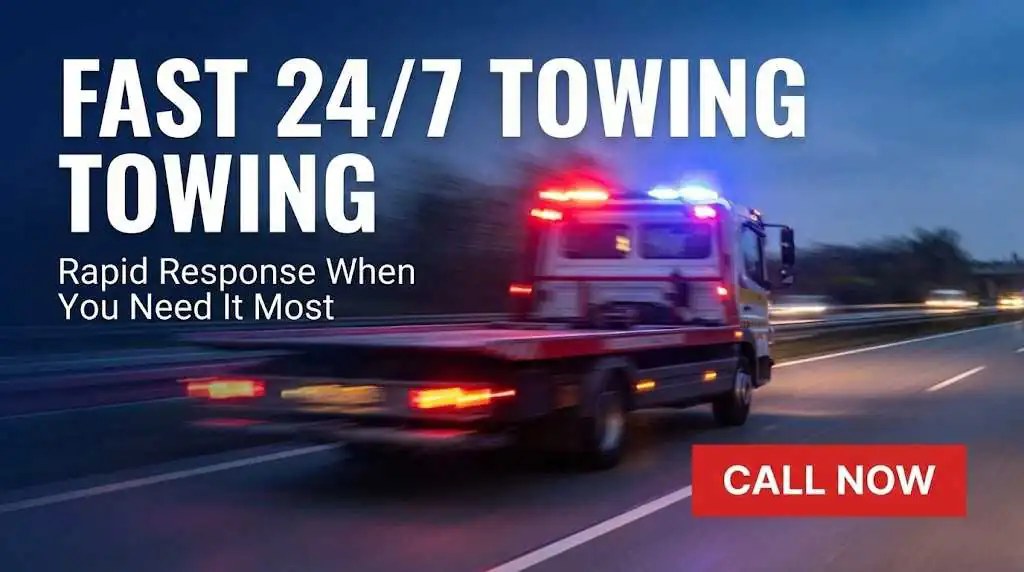
🚛 Quick Answer: Long distance towing moves your vehicle between cities when it cannot be driven — whether from a breakdown, accident, purchase, or relocation. Towing Toronto provides long distance vehicle towing from Toronto to Montreal (~540 km), Ottawa (~450 km), Niagara Falls (~130 km), Kingston, London, Windsor, Sudbury, Thunder Bay, and every destination across Ontario and into Quebec. All long distance tows use flatbed trucks for maximum vehicle protection. Call (647) 812-1477 for an upfront, fixed-price quote based on exact distance.
Need your vehicle transported long distance? Fixed pricing, GPS-verified distance, no surprises.
You bought a car in Montreal and need it in Toronto. Or your engine seized on the 401 near Kingston and the nearest dealer that can do the work is back home. Or you are relocating to Ottawa and want your project car transported safely instead of driving it 450 kilometres. Whatever the reason, towing a car long distance is a fundamentally different service from calling a tow truck after a downtown fender-bender — different equipment, different pricing structure, different logistics, and different things that can go wrong.
This guide covers the specific routes from Toronto to every major destination in Ontario and Quebec, the factors that determine long distance towing cost, why flatbed is the only sensible choice for inter-city transport, and what you should expect from pickup to delivery. Whether you are comparing quotes, planning a vehicle purchase from out of town, or stranded on a highway far from home, this is the guide you need before booking a long distance tow.
Toronto Long Distance Towing Route Guides
Every long distance tow from Toronto follows one of Ontario’s major highway corridors. The route determines the distance, the travel time, the terrain, and the logistics. Here are the most requested long distance towing routes from Toronto with specific details for each:
Get a Fixed-Price Quote for Your Route
GPS-verified distance. Per-kilometre pricing. No surprises at delivery. Toronto to anywhere in Ontario and Quebec.
How Long Distance Towing Cost Is Calculated
Long distance towing cost is structured differently from a local tow. Local towing typically charges a base rate (hookup fee) plus a per-kilometre rate for a relatively short trip. Long distance vehicle towing involves much larger distances and additional logistics — which means the pricing factors are more complex. Here is what determines the cost of towing a car long distance:
📏 Total Distance (Primary Factor)
Distance is the biggest driver of long distance towing cost. Pricing is typically per-kilometre, with the rate calculated based on GPS-verified distance between pickup and delivery. The tow truck must also return — this round-trip factor is built into the per-km rate. A 540-km tow to Montreal means the truck travels over 1,000 km total (out and back). Longer distances generally offer better per-km rates because the fixed costs (hookup, loading, documentation) are spread across more kilometres.
🚗 Vehicle Type and Weight
A compact car weighs 1,200–1,500 kg. A full-size SUV or pickup truck is 2,200–3,000+ kg. Heavier vehicles require larger flatbed trucks with higher fuel consumption and greater wear on equipment. Specialty vehicles — exotic cars, motorcycles, RVs, and heavy vehicles — may require specialised equipment that affects the rate.
⏰ Emergency vs. Scheduled
A scheduled long distance tow — booked days or weeks in advance — costs less than an emergency long distance tow dispatched immediately because your car broke down on the 401 near Belleville at midnight. Scheduled tows allow route optimisation and can sometimes be combined with return-trip logistics. Emergency calls require immediate dispatch, pull a truck off other duties, and often involve challenging conditions (roadside pickup, traffic management, night work).
🛣️ Route and Conditions
Highway tows on the 401 are straightforward. Tows to destinations off major highways — rural properties, cottage country, northern Ontario on two-lane roads — take longer and require more fuel. Winter conditions, construction detours, and seasonal road closures also affect travel time and cost. For details on how towing rates are structured in Ontario, see our towing cost and price guide.
💡 How Towing Toronto Quotes Long Distance Towing
We provide a fixed-price quote before you agree to the service. The quote is based on GPS-verified distance between the pickup and delivery addresses, your vehicle type, and any special requirements. The price you are quoted is the price you pay — no per-kilometre surprises at delivery, no hidden fuel surcharges, no “return trip” add-ons. Call (647) 812-1477 with your pickup and delivery addresses and we will provide an exact quote within minutes. For guidance on evaluating towing companies before you book, see our guide to choosing a reliable towing company and our towing scams protection guide.
Why Flatbed Towing Is the Only Choice for Long Distance
For a 5-kilometre tow from an accident scene to a body shop, a wheel-lift truck does the job. For a 540-kilometre tow to Montreal, only a flatbed makes sense. Here is why:
Zero drivetrain wear. On a flatbed, all four wheels are off the road. A wheel-lift tow over 500+ km puts hundreds of kilometres of rolling wear on the vehicle’s undriven wheels, tyres, bearings, and suspension. For AWD and 4WD vehicles, towing with any wheels on the ground can cause serious drivetrain damage — the transfer case and differentials are not designed to operate with some wheels turning and others stationary.
Protection from road hazards. Over 540 km, the towed vehicle is exposed to every road hazard the truck encounters — gravel thrown by other vehicles, road salt, potholes, debris. On a flatbed, the vehicle sits above road level, completely protected. A wheel-lift tow exposes the vehicle’s lower body, undercarriage, and trailing wheels to everything the road throws at them.
Stability at highway speed. A flatbed loaded vehicle sits low and centred on the truck’s deck. A wheel-lift vehicle trails behind the truck, subject to wind, sway, and lateral movement — manageable at 50 km/h on city streets, increasingly risky at 100+ km/h on the highway for hours at a time.
Vehicle condition on arrival. When you are towing a car long distance — especially a vehicle you have just purchased, a classic car, or an electric vehicle — you want it to arrive in exactly the condition it left. Flatbed towing delivers the vehicle the same way it was loaded: clean, undamaged, and with zero additional wear. This is why every Towing Toronto long distance tow uses a flatbed, regardless of vehicle type.
Common Reasons for Long Distance Towing
People assume long distance towing is only for breakdowns. In reality, the majority of long distance tows are planned, scheduled moves. Here are the most common scenarios:
What to Expect: The Long Distance Towing Process
Whether your long distance tow is a planned vehicle purchase transport or an emergency highway breakdown, the process follows the same steps:
Quote and Booking
Call (647) 812-1477 with: pickup address, delivery address, vehicle make/model/year, whether the vehicle runs, and any special requirements (enclosed transport, exotic car handling, motorcycle securing). You receive a fixed-price quote. For scheduled tows, you choose the pickup date and time. For emergency calls, dispatch is immediate.
Pickup and Vehicle Inspection
The flatbed arrives at the pickup location. The operator inspects the vehicle and documents its condition — existing damage, fluid leaks, tyre condition, mechanical state. This documentation protects both you and the towing company. Photos are taken. The vehicle is loaded onto the flatbed, secured with straps and wheel chocks, and the operator confirms the delivery address.
Transport
The operator drives the route — following the most efficient highway corridor to your destination. For longer routes (Toronto to Montreal, Toronto to Ottawa), the operator takes legally required rest breaks. The vehicle remains secured on the flatbed for the entire journey. You can typically expect updates at key milestones or request them by calling the dispatch number.
Delivery and Final Inspection
At the destination, the operator unloads the vehicle and you (or the receiving party) inspect it against the pickup documentation. The vehicle should be in exactly the same condition as when it was loaded. Any issues are noted and resolved immediately. For insurance-billed long distance tows, the documentation package is submitted to your insurer. For scheduled transport, payment is processed per the quoted price.
Towing Toronto Long Distance Towing Service
Towing Toronto provides long distance towing from Toronto to any destination in Ontario and Quebec:
Every Major Route Covered
Toronto to Montreal, Toronto to Ottawa, Toronto to Niagara, Toronto to Kingston, Toronto to London, Toronto to Windsor, Toronto to Barrie, Toronto to Sudbury, Toronto to Thunder Bay — and every point between. We tow across Ontario and into Quebec on all major highway corridors.
All Vehicle Types
Sedans, SUVs, trucks, vans, motorcycles, electric vehicles, exotic and luxury cars, RVs and recreational vehicles, boats, and commercial vehicles. For heavy vehicles and equipment, our heavy-duty fleet handles long distance transport as well.
Fixed-Price, GPS-Verified
Every long distance tow is quoted with GPS-verified distance measurement. The price you are quoted is the price you pay. No hidden charges, no fuel surcharges, no “return trip” add-ons calculated after the fact. All pricing complies with Ontario’s TSSEA requirements. To understand how towing rates work overall, see our towing cost and price guide.
Emergency and Scheduled
Broken down on the 401 right now? 24-hour emergency dispatch handles immediate long distance tows from anywhere — whether you are in Scarborough, North York, Etobicoke, Brampton, Markham, or on a highway 200 km from home. Need to transport a vehicle you bought in Montreal next Saturday? Book a scheduled pickup at a time that works for you. If you just need a battery boost or roadside assistance instead of a long distance tow, we handle that too. For our typical emergency response times, see our response time guide.
Frequently Asked Questions
How much does long distance towing from Toronto to Montreal cost?
The long distance towing cost from Toronto to Montreal depends on your specific vehicle type, exact pickup and delivery addresses, and whether it is an emergency or scheduled tow. The distance is approximately 540 km one way. For an exact fixed-price quote, call (647) 812-1477 with your pickup and delivery addresses — we will calculate the GPS-verified distance and provide the price immediately. The quote includes everything: hookup, transport, delivery, and all fuel and return costs.
Can you tow my car from Toronto to Ottawa?
Yes. Toronto to Ottawa is one of our most frequently requested long distance towing routes. The trip is approximately 450 km via the 401 and Highway 416 and takes 4.5–5.5 hours tow time. We provide both emergency service (your vehicle broke down and you need immediate transport to Ottawa) and scheduled service (you want to move a vehicle to Ottawa on a specific date). Flatbed transport is used for the entire journey.
Is my vehicle insured during long distance towing?
Yes. Towing Toronto carries full liability and cargo insurance covering your vehicle from pickup to delivery. This insurance covers damage that occurs during loading, transport, and unloading. We are TSSEA-certified and fully insured as required by Ontario law. Your own auto insurance may also cover the vehicle during transport — check your policy for “in-transit” or “non-owned vehicle” provisions. If the long distance tow is the result of a collision, direct insurance billing typically covers the full towing cost as part of the claim.
Can I ride in the tow truck during a long distance tow?
In many cases, yes — one passenger can ride in the cab of the flatbed truck during long distance transport. This is especially helpful for emergency breakdown situations where you are stranded far from home and need to get back to Toronto with your vehicle. However, passenger accommodation depends on the specific truck assigned, insurance provisions, and safety conditions. Let the dispatcher know when you call if you need to ride along, and they will confirm availability. For scheduled moves, most customers arrange separate transportation.
Long distance towing vs. auto transport — what is the difference?
Long distance towing uses a single flatbed truck carrying one vehicle — your vehicle has dedicated transport, door-to-door service, and direct delivery on your timeline. Auto transport (car shipping) typically uses multi-vehicle carriers that transport 6–10 cars at once — cheaper for very long distances but slower (days to weeks for pickup and delivery), less flexible on timing, and your vehicle is one of many on an open carrier exposed to weather. For distances within Ontario and to/from Quebec (under 1,500 km), long distance towing is typically faster, more flexible, and provides better vehicle protection than auto transport.
Can you tow a car that does not run?
Absolutely. A significant portion of long distance tows are for vehicles that are not running — broken down on a highway, engine failure, accident damage, no plates or insurance (newly purchased). Flatbed towing does not require the vehicle to run, steer, or have working brakes. The operator uses the flatbed’s hydraulic tilt and winch to load the vehicle without it needing to move under its own power. Non-running vehicles are our standard — this is exactly what long distance towing is designed for.
How far in advance should I book a scheduled long distance tow?
For scheduled long distance towing, booking 3–7 days in advance is ideal for most routes. Peak periods — spring and fall (seasonal vehicle moves), long weekends, and university move-in dates in September — book further ahead. Same-day or next-day scheduling is often available for non-peak periods. Emergency long distance tows are dispatched immediately, 24/7 — no advance booking needed. Call (647) 812-1477 for both scheduled bookings and immediate dispatch.
What if I need to tow my car from another city back to Toronto?
We handle inbound long distance tows to Toronto just as frequently as outbound. Montreal to Toronto, Ottawa to Toronto, Kingston to Toronto, Niagara to Toronto — the process and pricing work the same way. Call with the pickup location and your Toronto delivery address, and we provide a fixed-price quote. If you are currently stranded with your vehicle in another city, we can arrange pickup and transport back to your GTA address or preferred mechanic. For accident situations, direct insurance billing applies regardless of the pickup location.
Do you tow electric vehicles long distance?
Yes. Electric vehicle towing over long distances requires flatbed transport — which is exactly what we use for all long distance tows. EVs cannot be towed with wheels on the ground (the regenerative braking system and electric motors make this impossible without damage). On a flatbed, the EV is transported safely with all wheels off the road. If your EV ran out of charge far from a charging station, long distance towing gets it to the nearest compatible charger or back home. Tesla, Rivian, Hyundai, Kia, BMW, Mercedes, and every other EV brand — we transport them all.
Is long distance towing available in winter?
Yes — we provide long distance towing year-round, including throughout Ontario winters. Winter conditions can affect travel times (lake-effect snow, whiteout conditions on exposed highways like the 416, plowing delays on northern routes), and in extreme weather events the operator may delay departure until conditions are safe. Our flatbed trucks are equipped with winter tyres and our operators are experienced in highway-distance winter driving. Winter is actually peak season for emergency long distance tows — breakdowns spike during cold weather, and vehicles that fail far from home need transport back to their owner’s trusted mechanic. For winter driving safety tips, see our seasonal guide.
Toronto to Anywhere. Fixed Price. Flatbed Protected.
Long distance towing across Ontario and Quebec. Montreal, Ottawa, Niagara, Kingston, London, Sudbury, and beyond. GPS-verified pricing. 24/7 emergency and scheduled service.
Recent Comments