

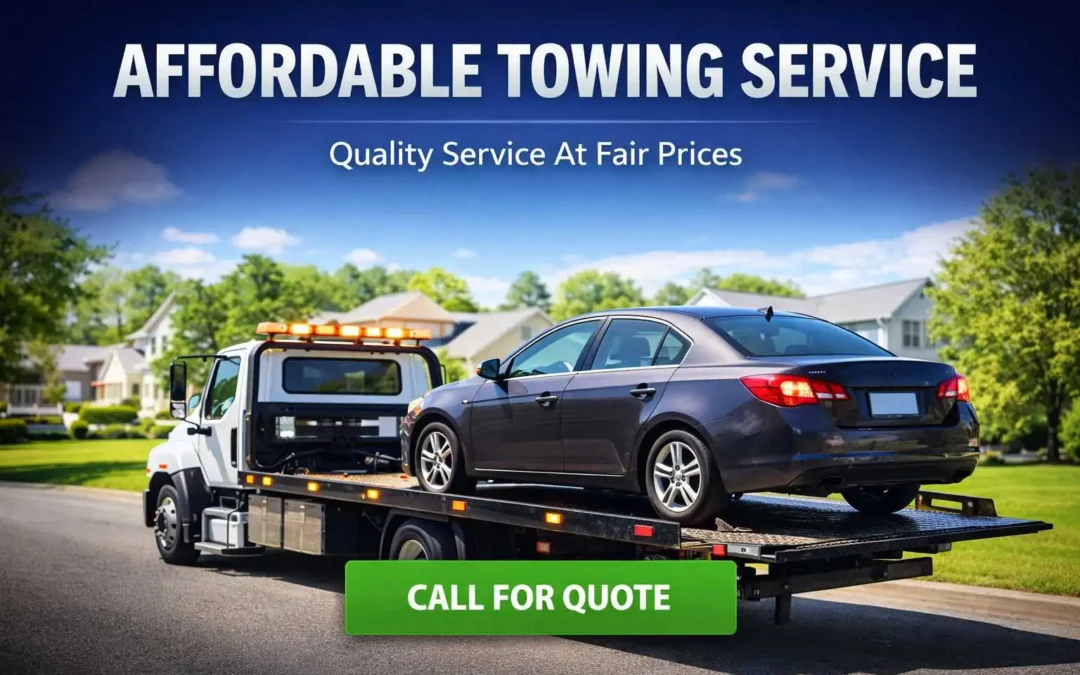
⚡ Quick Answer: Exotic and luxury vehicles require flatbed-only towing with specialised equipment — low-angle loading ramps, soft nylon wheel straps (never chains), and operators trained in handling low-clearance, high-value vehicles. Standard tow trucks risk scraping front splitters, damaging carbon fibre components, destroying AWD drivetrains, and causing paint damage worth thousands. Before you hand over your keys, verify that the towing company uses flatbed trucks, soft-strap securement, and carries insurance adequate for your vehicle’s value.
Need your exotic or luxury vehicle towed safely? We specialise in high-value vehicle transport.
Your vehicle is worth six figures. Maybe more. You have spent years finding the right one, customising it, maintaining it to factory standards. Then something goes wrong — a flat tyre on the DVP, a mechanical issue at a car show, or you need it moved to a new garage across the city — and suddenly the most valuable thing you own is at the mercy of whoever shows up with a tow truck.
This is where most exotic car owners make the most expensive mistake of their ownership: calling a generic towing company. The wrong operator, the wrong equipment, or the wrong loading angle can turn a routine tow into a $10,000+ repair bill in seconds — a scraped carbon fibre splitter, a bent exhaust diffuser, a destroyed AWD transfer case, or chain marks across a $5,000 paint correction.
This guide covers everything exotic and luxury car owners in Toronto need to know about safe vehicle transport — the equipment that matters, the risks most people overlook, and the questions to ask before you trust anyone with your keys.
Why Exotic and Luxury Cars Cannot Be Towed Like Regular Vehicles
A standard sedan sits 5–7 inches off the ground. A Lamborghini Huracán sits at 4.1 inches. A Ferrari F8 Tributo at 3.5 inches. A lowered Porsche 911 GT3 can have less than 3 inches of clearance across its entire flat underbody. These are not minor differences — they fundamentally change what towing equipment can be used, how the vehicle is loaded, where straps can be placed, and what can go wrong.
Beyond ground clearance, exotic and luxury vehicles have characteristics that make them uniquely vulnerable to towing damage:
Carbon Fibre Body Components
Front splitters, rear diffusers, side skirts, and underbody panels on vehicles like the McLaren 720S, Ferrari 488, and Lamborghini Aventador are often made of carbon fibre or carbon fibre reinforced polymer. These components are lightweight and extremely rigid — but they shatter rather than flex on impact. A single scrape during loading can crack a component worth $3,000–$15,000 to replace.
AWD and RWD Drivetrains
Towing an all-wheel-drive vehicle with any wheels on the ground can destroy the transfer case and transmission — a repair that starts at $5,000 and can exceed $20,000 on vehicles like the Audi R8, Nissan GT-R, or Porsche 911 Turbo. Even rear-wheel-drive sports cars risk drivetrain damage if towed with the drive wheels rolling. Flatbed towing with all four wheels off the ground is the only safe method.
Ceramic Brakes and Low-Profile Tyres
Carbon ceramic brakes — standard on many Ferraris, Porsches, and Lamborghinis — cost $8,000–$20,000+ per set. Improper strap placement near brake components or clamping mechanisms that contact the rotors can cause micro-cracks that are invisible but compromise braking performance. Low-profile tyres on 20–21 inch wheels with 25-series sidewalls provide almost no cushion and are easily damaged by improper loading.
Air Ride Suspension Systems
Many modern luxury and exotic vehicles — including the Bentley Continental GT, Rolls-Royce, Range Rover, and Ferrari Roma — have adjustable air ride suspension. An experienced operator knows to raise the suspension to its maximum height before loading, adding critical clearance. An inexperienced operator who does not check the suspension will attempt to load at the vehicle’s lowest ride height, almost guaranteeing contact with the ramp.
Wide Bodies and Non-Standard Dimensions
A Lamborghini Aventador is 2,030 mm wide. A standard flatbed deck is roughly 102 inches (2,591 mm). That leaves only about 280 mm of total side clearance — roughly 5.5 inches on each side. A wide-body kit, aftermarket fender flares, or even factory-wide vehicles like the Porsche 911 Turbo S reduce that margin further. Operators who have never loaded a wide-body vehicle may misjudge alignment and contact the bed rails.
Factory and Custom Paint
A factory respray on a Lamborghini or Ferrari can cost $10,000–$30,000+. Custom paint-to-sample finishes can exceed $50,000. Metal chains or cable hooks that contact any painted surface will leave marks that may require full-panel refinishing. Even rubber-coated J-hooks can leave impressions on soft clear coats. Only soft nylon wheel straps and wheel nets should ever be used to secure a luxury or exotic vehicle.
Your Car Deserves Better Than a Generic Tow.
Flatbed-only. Soft straps. Trained operators. Manufacturer-certified procedures. 24/7.
The Equipment That Matters: What to Look For (and What to Avoid)
Not all flatbed tow trucks are equal, and not all flatbed towing is safe for exotics. Here is the specific equipment a towing company needs to transport a high-value vehicle without damage:
🚫 Never Allow These on an Exotic or Luxury Vehicle
Hook-and-chain towing: The most damaging method. Chains scrape paint, damage bumpers, and drag the vehicle with wheels on the ground. This method should never be used on any modern vehicle, let alone a high-value one.
Wheel-lift (yoke) towing: Lifts the front or rear axle while the other wheels roll on the road. Risks drivetrain damage on AWD/RWD vehicles, can scrape body kits, and provides less stability than a flatbed — especially in Toronto winter road conditions.
Metal chains or cable hooks for securement: Even rubber-coated hooks leave marks on soft clear coats and can crack carbon fibre components. If you see chains coming out, stop the process.
The Professional Loading Process: 8 Steps for Damage-Free Transport
A professional exotic car towing operation follows a specific protocol. If the company that arrives does not follow these steps, that is your signal to stop and call someone else. Here is what the process should look like:
Pre-arrival vehicle assessment
When you call, the dispatcher should ask: make, model, and year; ground clearance; drivetrain type (AWD, RWD, FWD); any modifications (lowered suspension, wide body, front splitter, diffuser); whether the vehicle is driveable; and the pickup and delivery locations. This information determines which truck and which operator respond.
Full condition documentation
Before the vehicle is touched, the operator photographs every panel, every corner, the undercarriage, wheels, and any pre-existing marks or damage. You should do the same with your own phone. This creates a verifiable record that protects both you and the towing company if a damage dispute arises later.
Suspension adjustment
If the vehicle has adjustable air ride suspension, it should be raised to its maximum height setting before loading. Many modern Ferraris, Bentleys, Rolls-Royces, and Range Rovers have a “lift” or “transport” mode that adds 25–40 mm of extra clearance. This single step can mean the difference between a clean load and a scraped splitter.
Low-angle ramp deployment
The flatbed bed is lowered as far as possible, and if the truck is equipped with a ramp extension, it is deployed to create the shallowest possible approach angle — ideally 8–12 degrees. The operator positions the truck on flat, even ground. For extremely low vehicles, some operators use portable ramp extensions or bridge plates to further reduce the angle.
Careful loading (driven or winched)
If the vehicle is driveable, it is slowly driven onto the flatbed with a spotter guiding the driver to ensure centred alignment. If not driveable, a winch pulls it up via a strap attached to the frame or designated tow point — never to the bumper, body panels, or suspension components. The operator watches the front lip clearance throughout.
Soft-strap securement at all four wheels
The vehicle is secured using soft nylon wheel straps or wheel nets at all four corners. Straps are tightened to manufacturer specifications — snug enough to prevent movement, but not so tight that they compress the suspension or stress tyre sidewalls. No part of the securement system should touch the vehicle body, paint, brake components, or exhaust.
Transit precautions
The operator plans a route that avoids steep inclines, rough road surfaces, and low-clearance overpasses. The driver monitors speed and avoids sudden braking or sharp turns that could shift the load. Mirrors are folded, alarms are disabled, and if the vehicle has active parking sensors, they are turned off to prevent false triggers during transport.
Unloading and post-transport inspection
At the destination, the same low-angle ramp process is used in reverse. Once unloaded, the operator and owner conduct a final walk-around inspection and compare to the pre-tow photos. Any discrepancy is documented immediately.
When Exotic Car Owners in Toronto Need Towing
Exotic car towing is not just for breakdowns. Toronto’s luxury car community regularly needs professional transport for a range of situations:
🏁 Car Shows and Events
Transporting vehicles to and from events like the Canadian International AutoShow, Cars and Coffee meetups, or private concours events. Many owners prefer not to drive their vehicles on city streets due to pothole risk, road debris, or mileage considerations.
🔧 Dealership and Service Transfers
Moving vehicles between private garages, dealerships, and specialist service centres. Ferrari, Lamborghini, and Porsche dealerships in the GTA frequently arrange towing for scheduled maintenance to minimise unnecessary road exposure and mileage.
🚨 Emergency Breakdowns
Flat tyres, electrical failures, overheating, or mechanical issues on Toronto roads. When your vehicle is stranded, speed matters — but so does having the right equipment show up. Calling a general tow service risks getting a wheel-lift truck that cannot safely handle your car.
💰 Purchase and Sale Transport
Delivering a newly purchased vehicle from a private seller or out-of-town dealer to your home garage. Also transporting a vehicle you are selling to a buyer’s location or a pre-purchase inspection facility.
❄️ Seasonal Storage
Many exotic car owners in Toronto store their vehicles from November through April to avoid road salt, ice, and winter driving hazards. Professional towing handles the move to and from climate-controlled storage facilities.
🏎️ Track Day Transport
Transporting race-prepped or track-day vehicles to Canadian Tire Motorsport Park (Bowmanville), Shannonville Motorsport Park, or other circuit events. Enclosed transport is preferred for dedicated track cars to protect from road debris during the journey.
7 Questions to Ask Before You Trust Anyone With Your Keys
Not every company that claims to offer luxury car towing actually has the equipment or experience to do it safely. Before you book, ask these questions — the answers will tell you immediately whether they are qualified:
Q1: “Do you use flatbed trucks exclusively for exotic vehicles?” — The only acceptable answer is yes. Any hesitation, mention of wheel-lift, or “it depends” means call someone else.
Q2: “What is the approach angle on your loading ramp?” — A company that specialises in exotics will know this number. If they do not understand the question, they do not tow exotics regularly.
Q3: “What securement method do you use?” — You want to hear “soft nylon wheel straps” or “wheel nets.” If they mention chains, cables, or J-hooks, your vehicle is at risk.
Q4: “Have you towed my specific make and model before?” — A Porsche 911 and a Lamborghini Aventador have completely different loading requirements. Experience with your specific vehicle type matters.
Q5: “Do you photograph the vehicle before and after transport?” — This should be standard practice. A company that does not document condition is a company that is not prepared for accountability.
Q6: “What is your insurance coverage for high-value vehicles?” — Standard towing insurance may cap at $50,000–$100,000 per vehicle. If your car is worth $200,000+, confirm they carry adequate coverage. Ask for proof.
Q7: “Are you TSSEA-certified?” — In Ontario, all tow operators must be certified under the Towing and Storage Safety and Enforcement Act. This ensures the company meets provincial standards for equipment, training, and consumer protection. If they are not certified, they are not legal.
For more guidance on evaluating towing providers, see our complete guide on how to choose a reliable towing company in Toronto.
How Towing Toronto Handles Exotic and Luxury Vehicles
Towing Toronto provides specialised exotic car transport across the Greater Toronto Area and beyond. Here is what sets our service apart for high-value vehicle owners:
Flatbed-Only Fleet
Every exotic vehicle call is served by a flatbed tow truck equipped with low-angle hydraulic loading. We never use wheel-lift or hook-and-chain methods on luxury vehicles.
Manufacturer-Certified Procedures
Our operators follow manufacturer-specified towing procedures for each vehicle make. We know which tow points are designated, which suspension modes to activate, and where straps can and cannot be placed.
Soft-Strap Securement Only
No chains. No cables. No J-hooks. Soft nylon wheel straps are the only securement method that touches your vehicle, ensuring zero risk of paint damage, body contact, or brake component interference.
TSSEA-Certified and Fully Insured
We are fully certified under Ontario’s Towing and Storage Safety and Enforcement Act and carry comprehensive insurance for high-value vehicle transport. Insurance billing is available for accident-related tows.
We transport all exotic and luxury brands across the GTA, including Ferrari, Lamborghini, McLaren, Porsche, Bentley, Rolls-Royce, Aston Martin, Mercedes-AMG, BMW M, Audi RS, Maserati, Corvette, GT-R, and classic and vintage collectibles. Whether you need emergency accident towing, scheduled transport to an event, or seasonal storage relocation, our service is available 24 hours a day, 7 days a week.
Owner’s Checklist: Preparing Your Exotic Car for Towing
Even with the right towing company, there are steps you should take as the owner to protect your vehicle and make the process smoother:
Know your vehicle’s ground clearance — and communicate it to the dispatcher. If you have aftermarket lowering springs or coilovers, measure the actual clearance, not the factory spec.
Raise your air suspension — if your vehicle has it, activate the lift or transport mode before the truck arrives. This adds 25–40 mm of clearance that makes loading significantly safer.
Photograph your vehicle yourself — take detailed photos of every panel, corner, wheel, underside, and any existing marks before the operator arrives. Time-stamped phone photos are sufficient.
Remove or protect removable components — if your vehicle has a removable front splitter, detachable wing, or fragile aftermarket parts, consider removing them for transport.
Fold your mirrors and disable alarms — folded mirrors reduce the risk of contact during loading. Disabling the alarm and parking sensors prevents false activations that can startle the operator during the loading process.
Provide tow point locations — check your owner’s manual for the designated tow hook or recovery point locations. Some vehicles have hidden tow hooks stored in the trunk or under a panel. Show these to the operator.
Remove valuables and personal items — clear the cabin and trunk of any loose items that could shift during transport. This also protects your belongings and reduces potential liability disputes.
Stay present for loading and unloading — the two highest-risk moments are when the vehicle goes onto and comes off the flatbed. Being present allows you to spot potential issues in real time and confirm the vehicle’s condition before and after.
Frequently Asked Questions
Can a standard tow truck safely tow an exotic car?
No. Standard wheel-lift and hook-and-chain tow trucks are not safe for exotic or luxury vehicles. Wheel-lift trucks can damage AWD and RWD drivetrains by towing with wheels on the ground, scrape low-clearance body components, and cause paint and body damage through metal contact. Only a flatbed tow truck with soft-strap securement should ever be used on an exotic or luxury vehicle.
How much does exotic car towing cost in Toronto?
Exotic car towing typically costs more than standard towing due to specialised equipment, trained operators, and higher insurance requirements. The exact cost depends on the pickup location, destination distance, time of day, and vehicle type. For a transparent quote with no hidden fees, call Towing Toronto at (647) 812-1477. For general towing pricing information, see our towing cost and price guide.
What is the difference between flatbed towing and enclosed transport?
Flatbed towing places your vehicle on an open flatbed deck where it is secured with straps but exposed to weather and road debris. This is the standard for local exotic car towing and most short-distance transport within the GTA. Enclosed transport places the vehicle inside a fully enclosed trailer, protecting it from all external elements. Enclosed transport is recommended for long-distance moves, vehicles worth over $250,000, vehicles with fresh paint or detailing, and transport during winter months when road salt spray is a concern.
Can you tow a lowered car without damage?
Yes — but only with the right equipment and technique. The key is a flatbed with a low-angle loading ramp (8–12 degrees rather than the standard 15–20 degrees). If your vehicle has air suspension, raising it to the maximum setting before loading adds critical clearance. When you call, provide your exact ground clearance measurement and describe any modifications like front splitters, side skirts, or diffusers so the right truck and operator can be dispatched.
Is my exotic car insured during towing?
A professional towing company should carry cargo insurance that covers the vehicles it transports. However, standard towing insurance policies may have coverage limits that are lower than the value of exotic vehicles. Always ask for the maximum per-vehicle coverage amount and request proof of insurance before your vehicle is loaded. Your own comprehensive auto insurance may also provide some coverage during transport — check with your broker.
What vehicles qualify as “exotic” or “luxury” for towing purposes?
Any vehicle that requires specialised handling due to high value, low ground clearance, performance drivetrain, carbon fibre components, or collector status. This includes supercars (Ferrari, Lamborghini, McLaren, Bugatti), luxury sedans and coupes (Bentley, Rolls-Royce, Aston Martin, Mercedes-AMG, BMW M), performance vehicles (Porsche 911, Corvette, GT-R, Audi R8), classic and vintage collectibles, modified and track-prepped vehicles, and high-value electric vehicles (Tesla Model S Plaid, Porsche Taycan, Rivian). When in doubt, request flatbed-only service.
Do you tow electric supercars and high-performance EVs?
Yes. Electric vehicles — including high-performance models like the Tesla Model S Plaid, Porsche Taycan Turbo S, and Rimac — must always be flatbed towed. Towing an EV with wheels on the ground can damage the electric motors, regenerative braking systems, and battery components. Our operators follow EV-specific towing protocols including battery safety checks and ensuring the vehicle is in transport mode before loading.
Can you transport my car to a track day or car show?
Absolutely. We regularly transport vehicles to and from Canadian Tire Motorsport Park, car shows, and private events across the GTA and Ontario. For scheduled transport (non-emergency), we recommend booking at least 48 hours in advance so we can assign the right equipment and operator for your specific vehicle. Contact us to arrange transport for your next event.
What should I do if a tow truck damages my exotic car?
Document the damage immediately with photos and video. Do not allow the tow truck operator to leave without acknowledging the damage in writing. Contact the towing company’s management and request their insurance information. File a claim with their insurer and notify your own insurance company. If the company is uncooperative, file a complaint with the Ontario MTO under the TSSEA. The pre-tow condition photos you took (or the operator took) are your most important evidence.
Do you offer classic and vintage car towing?
Yes. Classic and vintage vehicles require the same level of care as modern exotics — often more, since replacement parts may be unavailable or must be custom-fabricated. Our operators follow the same flatbed-only, soft-strap protocol for classic cars. Whether you have a vintage Porsche 356, a classic Corvette, or a restored muscle car, we treat it with the same precision as a brand-new supercar.
Save Our Number Before You Need It.
Flatbed-only exotic car transport. Manufacturer-certified procedures. Soft-strap securement. TSSEA-certified. Available 24/7 across Toronto and the GTA.
Recent Comments